Whether you’re installing a new showerhead, replacing a plumbing fixture, or fixing a small leak, plumbers tape is one of the most useful supplies to have in your toolbox. Also known as Teflon tape, PTFE tape, or thread seal tape, this inexpensive material helps create reliable, leak-resistant connections between certain threaded plumbing fittings.
But knowing how to use plumbers tape correctly is important. Applying too much tape, wrapping it in the wrong direction, or using it on the wrong type of fitting can actually cause plumbing problems.
In this guide, the team at Beacher McNeal Plumbing & Well Pump Service explains what plumbers tape does, how to apply it, when to use it, and how to remove it when making plumbing repairs around your home.
What Does Plumbers Tape Do?
Plumbers tape helps seal threaded pipe connections to prevent water from leaking. It works by filling small gaps between mating pipe threads and helping the fittings screw together smoothly.
Plumbers tape is typically made from polytetrafluoroethylene (PTFE), a flexible material that resists water and many chemicals.
Common uses for plumbers tape include:
- Installing showerheads and shower arms
- Connecting certain threaded water pipes
- Sealing compatible threaded plumbing adapters
- Installing some outdoor hose fittings
- Assembling threaded plumbing fixtures that require thread sealant
However, not every threaded connection needs plumbers tape. Many supply lines, compression fittings, and connections with rubber washers or O-rings rely on a separate sealing surface. Adding tape to these fittings can interfere with the seal.
How to Use Plumbers Tape: Step-by-Step Instructions
If you’re wondering how to apply plumbers tape, the process is relatively straightforward. The key is starting with clean threads and wrapping the tape in the correct direction.
Step 1: Turn Off the Water Supply
Before disconnecting any plumbing fixture or fitting, turn off the appropriate water supply valve. Open a nearby faucet to relieve any remaining water pressure.
For a showerhead replacement, shutting off the shower valve may be sufficient, but other repairs may require turning off the home’s main water supply.
Step 2: Clean the Pipe Threads
Remove any old tape, dirt, or debris from the threaded connection. Use a soft brush or clean cloth to make sure the threads are dry and free of buildup.
Inspect the fitting for damaged threads or cracks. Plumbers tape cannot repair a broken fitting or compensate for badly damaged threads.
Step 3: Position the Tape
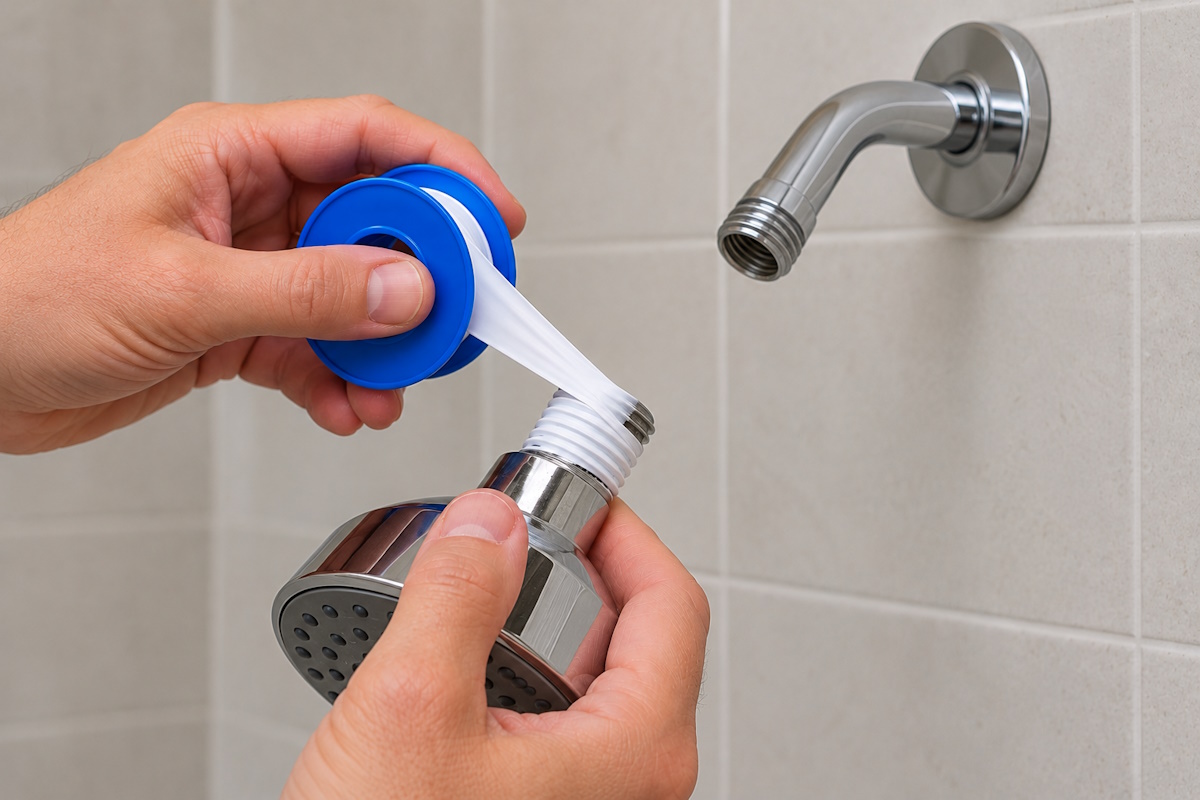
Hold the threaded pipe or fitting with the threads pointing toward you. Place the end of the plumbers tape against the threads, starting approximately one thread back from the opening.
Keeping tape away from the pipe opening helps prevent loose pieces from entering the plumbing system.
Step 4: Wrap the Tape Clockwise
When looking directly at the end of a standard right-hand threaded fitting, wrap the tape clockwise. This is the same direction the mating fitting turns when tightened.
Wrapping in the opposite direction can cause the tape to unravel as the connection is assembled.
Step 5: Apply the Proper Number of Wraps
For many common household water connections, approximately two to three snug wraps of standard-density PTFE tape may be sufficient. However, the correct amount depends on the tape thickness, fitting material, and manufacturer’s instructions.
Overlap the tape slightly as you wrap, keeping it smooth and firmly seated in the threads. Avoid excessive layers, which can make fittings difficult to assemble or damage certain connections.
Step 6: Reassemble and Check for Leaks
Carefully screw the fitting back into place, making sure the threads engage properly. Tighten according to the manufacturer’s recommendations without overtightening.
Turn the water supply back on slowly and inspect the connection for dripping or moisture. If the connection leaks, shut off the water and inspect the fitting rather than simply adding more tape.
How to Install Plumbers Tape on a Showerhead
One of the most common reasons homeowners learn how to install plumbers tape is to replace a showerhead.
First, remove the existing showerhead and clean any old tape from the shower arm threads. Check whether the replacement showerhead requires PTFE tape. Some showerheads use rubber washers and do not require additional thread sealant.
If tape is recommended, wrap the shower arm threads clockwise with the appropriate number of layers. Install the new showerhead, tighten it according to the manufacturer’s instructions, and run the shower to check for leaks.
If water continues to drip from the connection, the issue could involve damaged threads, an improperly seated washer, or another plumbing problem.
How to Remove Plumbers Tape
Knowing how to remove plumbers tape is just as important as knowing how to apply it. Old tape should generally be removed whenever you disassemble a taped connection.
- Disconnect the fitting: Make sure the water supply is off and carefully separate the threaded connection.
- Peel away the old tape: Use your fingers to remove as much material as possible.
- Clean the threads: Gently remove remaining tape with a soft brush or a suitable non-damaging tool.
- Inspect the fitting: Check for corrosion, cracks, or worn threads.
- Apply fresh tape: If the connection requires it, use new PTFE tape before reassembling.
Avoid using sharp metal tools that could scratch or damage the threads, particularly on plastic or softer metal fittings.
Common Mistakes When Applying Plumbers Tape
Even though plumbers tape is easy to use, several common mistakes can lead to leaks or damaged connections.
- Wrapping in the wrong direction: Tape may loosen when the fitting is tightened.
- Using too much tape: Excessive layers can prevent proper assembly or place unnecessary stress on fittings.
- Applying tape over old tape: Leftover material can prevent a clean, reliable seal.
- Using tape on the wrong connection: Compression fittings, flare fittings, and gasket-sealed connections generally do not need tape on their sealing surfaces.
- Overtightening fittings: Excessive force can crack plastic fittings or damage metal threads.
- Using the wrong tape: Gas piping and specialty applications require specifically approved materials and installation methods.
Frequently Asked Questions About Plumbers Tape
Does plumbers tape stop leaks?
Plumbers tape can help prevent leaks in compatible threaded pipe connections. However, it will not repair cracked pipes, damaged fittings, or leaks caused by failed washers or other plumbing components.
How many times should you wrap plumbers tape?
Two to three wraps of standard-density PTFE tape are commonly used for many household water connections, but the manufacturer’s instructions should always determine the proper amount.
Can you use plumbers tape on plastic pipes?
Some plastic threaded fittings permit PTFE tape, while others require a different sealant or prohibit its use. Always follow the fitting manufacturer’s recommendations, since excessive tape or overtightening can crack plastic connections.
Can you reuse plumbers tape?
No. Once a threaded connection has been disassembled, old plumbers tape should be removed and replaced if tape is required for that connection.
Is plumbers tape the same as electrical tape?
No. Plumbers tape is typically made from PTFE and is designed for compatible threaded connections. Electrical tape is an insulating material and should not be used as a substitute for plumbing thread seal tape.
Need Help With a Plumbing Leak? Contact Beacher McNeal!
Learning how to use plumbers tape can help with simple household plumbing projects, but not every leak can be fixed with a roll of tape. Persistent leaks, damaged fittings, and problems involving your home’s water supply may require professional attention.
At Beacher McNeal Plumbing & Well Pump Service, our licensed Connecticut plumbers provide dependable plumbing repairs and replacements for homeowners and businesses throughout Connecticut.
Whether you’re dealing with a leaking fixture, damaged water pipe, or unexpected plumbing emergency, we’re here to help.
Call (860) 742-1638 or contact Beacher McNeal today for professional plumbing service in Connecticut.
