How to Use a Plumbing Snake: A DIYer’s Guide to Plumbing Snakes
A slow-draining sink, clogged bathtub, or backed-up shower can quickly become a frustrating household problem. While a plunger may clear some blockages, stubborn clogs sometimes require a different approach. That’s where a plumbing snake comes in.
Learning how to use a plumbing snake can help homeowners tackle certain drain clogs without immediately scheduling a plumbing repair. However, using the wrong tool or applying too much force can damage pipes and fixtures.
In this DIY guide, the team at Beacher McNeal Plumbing & Well Pump Service explains what plumbing snakes are, how they work, and how to use them safely to clear common household drain blockages.
What Is a Plumbing Snake?
A plumbing snake, also called a drain snake or drain auger, is a flexible metal cable designed to travel through drainpipes and break up or retrieve certain types of clogs.
Unlike a plunger, which uses pressure to dislodge a blockage, a plumbing snake physically reaches into the drain to loosen or remove the material causing the obstruction.
Plumbing snakes are commonly used for:
- Bathroom sink clogs caused by hair and soap buildup
- Shower and bathtub drains clogged with hair
- Kitchen sink blockages caused by accumulated debris
- Some toilet clogs when using a toilet-specific auger
- Clogs located beyond the immediate drain opening
Although plumbing snakes can be effective, they aren’t appropriate for every situation. Serious blockages, damaged pipes, and sewer line problems often require professional equipment and expertise.
Types of Plumbing Snakes
Before learning how to use a plumber snake, it’s helpful to understand the different types available.
Handheld Drain Snake
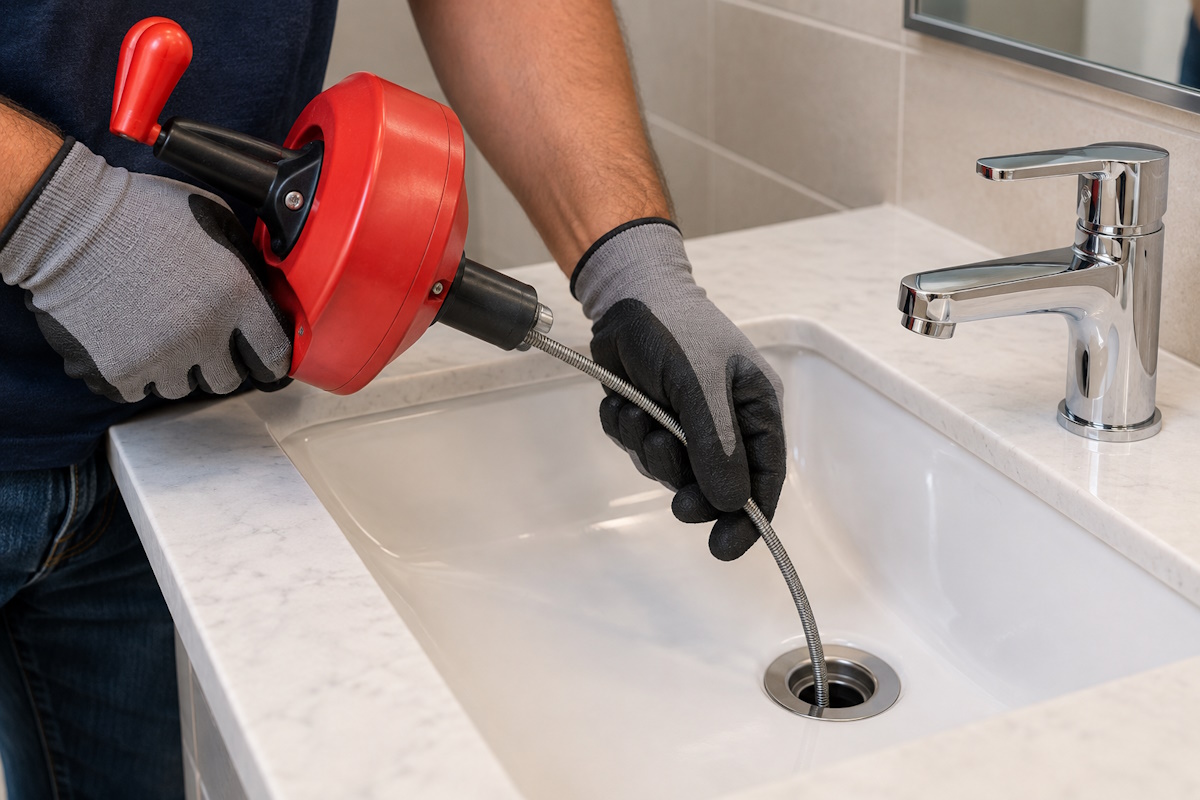
A handheld drain snake is a small, manually operated tool with a flexible cable. It’s generally suitable for minor clogs in bathroom sinks, tubs, and showers.
These are among the most common drain-cleaning tools for homeowners.
Drum Auger
A drum auger stores a flexible cable inside a rotating drum. Some models are hand-operated, while others use a powered mechanism.
Drum augers are commonly used for household drain blockages that are farther down the pipe.
Toilet Auger
A toilet auger, sometimes called a closet auger, is specifically designed to navigate a toilet’s curved internal trap while helping protect the porcelain.
Never use an ordinary exposed metal drain snake directly through a toilet bowl. Doing so can scratch or damage the fixture.
Motorized Drain Snake
Motorized drain snakes use powered rotation to tackle more difficult blockages. These tools can be effective but also introduce additional risks, including cable binding, pipe damage, and injury.
For serious clogs that require powered drain-cleaning equipment, contacting a licensed plumber is usually the safer option.
How to Use a Plumbing Snake: Step-by-Step
If you’re wondering how do you use a plumbing snake, follow these general steps for a basic handheld drain snake in a compatible sink, shower, or bathtub drain.
Step 1: Gather Your Supplies
Before getting started, you’ll want to have a few supplies ready:
- A properly sized handheld plumbing snake
- Protective gloves
- Safety glasses
- Old towels or rags
- A bucket for debris and water
- A flashlight
If you’ve recently poured chemical drain cleaner into the drain, do not insert a snake. Residual chemicals can splash onto your skin or eyes. Contact a professional and explain which product was used.
Step 2: Remove the Drain Stopper
Remove the sink stopper or drain cover if it can be safely detached. This gives the snake better access to the drain opening.
For bathroom sinks, you may need to remove the stopper mechanism. For showers and bathtubs, carefully lift off the drain cover according to the fixture’s design.
Some sink drains are easier and safer to access through a removable trap, but this requires properly disconnecting and reinstalling the plumbing.
Step 3: Insert the Plumbing Snake
Slowly feed the end of the snake into the drain opening. Use gentle pressure and allow the flexible cable to follow the pipe’s bends.
Avoid forcing the snake through tight turns or obstructions. Excessive pressure can damage drain components or cause the cable to become stuck.
Step 4: Rotate the Snake
As you advance the cable, rotate the handle in the direction recommended by the snake manufacturer. This helps the cable navigate bends and engage certain blockages.
Continue feeding the snake slowly until you encounter resistance.
Some resistance is normal when the cable reaches a pipe bend, so don’t automatically assume you’ve found the clog.
Step 5: Break Up or Retrieve the Clog
Once you’ve reached the blockage, gently rotate and advance the snake as directed by the manufacturer.
Depending on the type of clog and snake attachment, the cable may break up accumulated material or catch hair and debris that can be pulled out.
If the cable becomes tightly stuck, stop rather than forcing it. A bound cable can damage plumbing or become difficult to retrieve.
Step 6: Slowly Remove the Snake
Carefully withdraw the snake while maintaining control of the cable. Keep a bucket or towel nearby to catch water and debris.
Remove any hair, grease, or other material attached to the end of the cable. Dispose of the debris in the trash rather than washing it back down the drain.
Step 7: Test the Drain
Once the snake has been removed, run water slowly to see whether drainage has improved.
If water flows freely, you’ve likely cleared at least part of the blockage. If the drain remains slow or backed up, avoid repeated aggressive attempts and consider contacting a professional plumber.
How to Use a Plumbing Snake on Different Drains
The general process is similar across many fixtures, but different drains require different techniques and tools.
How to Snake a Bathroom Sink
Bathroom sinks commonly develop clogs from hair, toothpaste residue, and soap buildup.
Start by removing the drain stopper and clearing any visible debris. If the clog remains, a small handheld drain snake may help remove material farther down the drain.
Be especially careful around thin drain assemblies and plastic components, which can be damaged by excessive force.
How to Snake a Shower or Bathtub Drain
Hair and soap residue are common causes of shower and bathtub clogs.
Remove the drain cover and clear any visible hair before inserting a compatible snake. Feed the cable slowly, allowing it to follow the drainpipe without forcing it.
Some bathtub drain designs are better accessed through the overflow opening rather than the drain itself. Always follow the fixture and tool manufacturer’s guidance.
How to Snake a Kitchen Sink
Kitchen sink drains often clog because of accumulated grease, food particles, and other debris.
A drain snake may help with certain blockages, but hardened grease and deeper clogs can be difficult to remove using a basic handheld tool.
If your kitchen sink has a garbage disposal, turn off its electrical power before inspecting the drain. Never insert a drain snake through the disposal mechanism unless the manufacturer specifically permits it.
How to Snake a Toilet
Toilets require a specialized toilet auger designed to protect the porcelain and navigate the toilet’s internal trap.
Insert the protected end of the toilet auger into the bowl outlet and operate it according to the manufacturer’s instructions.
If the toilet is overflowing, shut off its water supply first. If the auger doesn’t clear the blockage or multiple fixtures are backing up, contact a professional plumber.
Common Mistakes to Avoid When Using a Plumbing Snake
Even after learning how to use plumbing snake tools, homeowners can run into problems if they’re not careful.
- Using too much force: Pushing aggressively can damage pipes or cause the cable to bind.
- Choosing the wrong snake: Different drain sizes and fixtures require different equipment.
- Using a regular snake in a toilet: Exposed metal cables can scratch porcelain.
- Snaking after chemical drain cleaner: Chemical residue can cause dangerous splashes and injuries.
- Ignoring recurring clogs: Repeated blockages may indicate a deeper plumbing issue.
- Failing to clean the tool: Drain snakes should be cleaned, dried, and stored according to the manufacturer’s instructions after use.
Plumbing Snake vs. Plunger: Which Should You Use?
Both plungers and plumbing snakes are useful drain-cleaning tools, but they work differently.
A plunger uses pressure changes to help dislodge a clog. It’s often the best first option for minor sink and toilet blockages.
A plumbing snake physically reaches into the drain and may break apart or retrieve material that a plunger cannot remove.
For a minor blockage, start with an appropriate plunger. If plunging doesn’t work and the drain is suitable for a handheld snake, a plumbing snake may be the next step.
However, neither tool can fix every drainage problem. A damaged sewer line, invasive tree roots, or a significant obstruction may require professional diagnosis and repair.
When Should You Call a Professional Plumber for a Clogged Drain?
While knowing how to use a plumbing snake can be helpful for minor clogs, certain warning signs suggest it’s time to contact a licensed plumber.
- Multiple drains are clogged at the same time.
- Water backs up into another fixture when you use a sink, shower, or toilet.
- Clogs return shortly after being cleared.
- You notice sewage odors or wastewater backing up.
- The snake repeatedly gets stuck or won’t reach the blockage.
- You suspect tree roots, damaged pipes, or a main sewer line obstruction.
These symptoms may indicate a larger issue within your home’s plumbing system.
At Beacher McNeal Plumbing & Well Pump Service, our experienced Connecticut plumbers can diagnose stubborn drain problems and recommend appropriate repairs.
Frequently Asked Questions About Plumbing Snakes
Can a plumbing snake damage pipes?
Yes. Using an oversized snake, applying excessive force, or operating a cable incorrectly can damage pipes, joints, and plumbing fixtures. Older or deteriorating plumbing may be particularly vulnerable.
How far should you put a plumbing snake down a drain?
Insert the snake only as far as necessary to reach the blockage, while staying within the tool’s rated capacity. Never force a cable through significant resistance.
Can you use a plumbing snake on PVC pipes?
Some plumbing snakes are suitable for PVC drainpipes when used correctly. However, aggressive operation, sharp attachments, or inappropriate cable sizes can damage plastic plumbing.
Why is my drain still clogged after using a snake?
The snake may not have reached the blockage, the clog may have only been partially cleared, or the underlying problem may involve grease, tree roots, damaged piping, or another obstruction requiring professional attention.
Is it better to snake a drain or use chemical drain cleaner?
For many common clogs, mechanical methods such as plunging or carefully using a drain snake are preferable to harsh chemical drain cleaners. Chemical products can introduce safety hazards and may not address the underlying blockage.
Can I rent a plumbing snake?
Yes, some hardware stores and equipment rental companies offer drain snakes. However, powered and professional-grade machines require additional training and precautions. For serious blockages, hiring a licensed plumber is generally safer.
Stubborn Drain Clog? Call Beacher McNeal Plumbing & Well Pump Service!
A plumbing snake can be a helpful tool for clearing minor household clogs, but some drainage problems require more than a DIY solution.
At Beacher McNeal Plumbing & Well Pump Service, we provide reliable plumbing repairs for Connecticut homeowners and businesses. From stubborn drain blockages to unexpected plumbing emergencies, our licensed plumbers have the experience to identify problems and get your plumbing working properly again.
We also offer 24/7 emergency plumbing services in Connecticut for urgent situations that can’t wait.
Call (860) 742-1638 or contact Beacher McNeal Plumbing & Well Pump Service today for dependable plumbing assistance.
